What to Do in Barcelona: 20 Best Things and a 3-Day Plan
 The WhatToDoIn.eu Editorial Team
For a first visit to Barcelona, prioritise Sagrada Família, one other Gaudí site, the Gothic Quarter, Montjuïc and time beside the Mediterranean. Three full days cover those essentials at a sensible pace. Four or five days allow a beach afternoon, more neighbourhoods or a day trip without sacrificing the city itself.
Book Sagrada Família and Park Güell before the trip. Add either Casa Batlló or La Pedrera rather than paying to enter every Modernista building. Keep the old city, markets, parks and waterfront flexible around those timed reservations.
Barcelona is compact enough to combine nearby sights on foot, but its hills and busy attractions make over-planning tiring. This guide explains what deserves a ticket, what works from outside, how the neighbourhoods connect and what to leave for another day.
What are the best things to do in Barcelona?
The best things to do in Barcelona on a first visit are Sagrada Família, Park Güell, the Gothic Quarter, Passeig de Gràcia, El Born, Montjuïc and the waterfront. Add one museum, a market and an evening in Gràcia or Sant Antoni according to your interests.
Do not treat all 20 ideas below as a checklist. Sagrada Família and Park Güell each need a reserved slot and travel time. Montjuïc can occupy half a day, while the old city works best as a slow walk. Three days is enough when each day stays within one broad area.
A balanced plan mixes one major interior with streets, parks or the waterfront. That rhythm leaves room for meals and unexpected stops, and it reduces time spent crossing the city. If you have only one day, combine Sagrada Família with Passeig de Gràcia and the old city. With two days, add Park Güell and choose between Montjuïc and the beach according to the weather.
| Priority | Best choice | Time to allow | Book ahead? |
|---|---|---|---|
| Gaudí interior | Sagrada Família | About 2 hours | Yes |
| Gaudí landscape | Park Güell | About 2 hours | Yes |
| Historic walk | Gothic Quarter and El Born | Half a day | No |
| Views and museums | Montjuïc | Half a day | Only selected attractions |
Is Sagrada Família worth visiting inside?
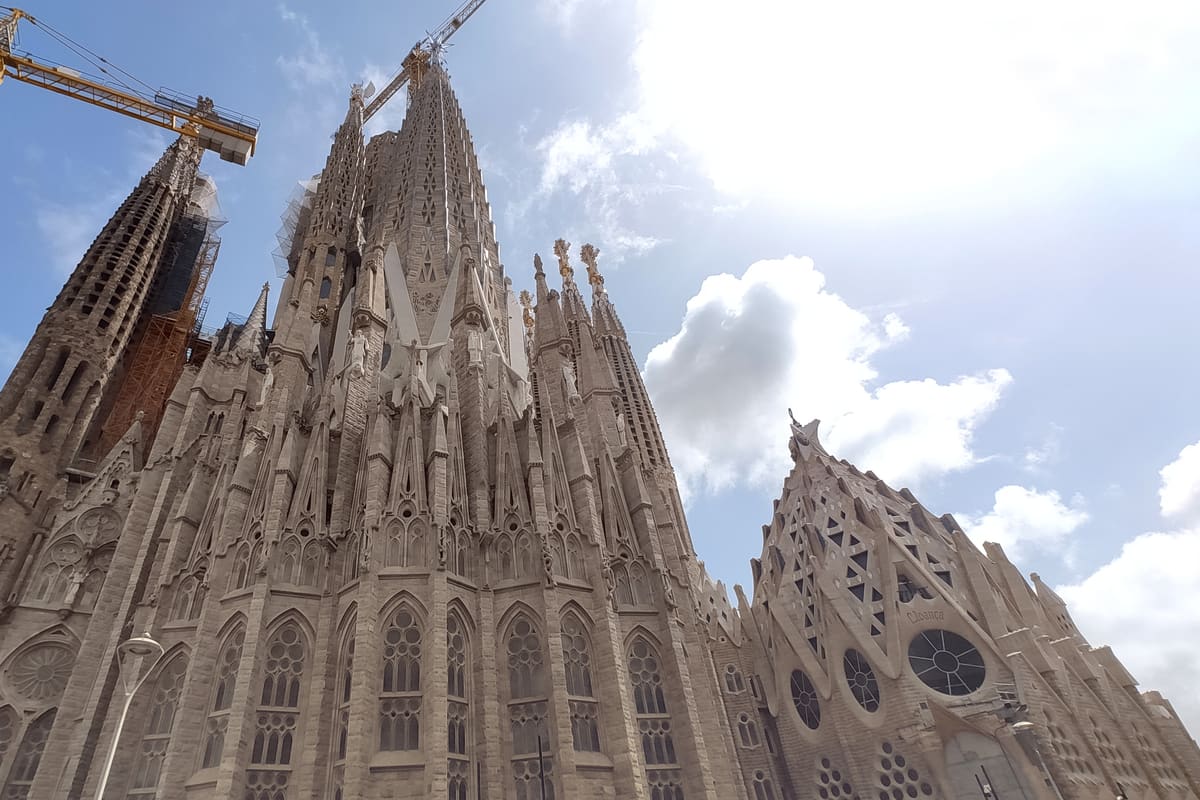
Yes. Sagrada Família is the Barcelona landmark most worth entering because the interior light, branching columns and scale cannot be understood from the pavement. Tickets are sold online, and the basilica's official site says opening times can change for religious and special events. Reserve a specific time before arranging the rest of that day.
Allow roughly two hours for the basilica, museum and exterior façades. Tower access is an optional addition, not an essential part of a first visit. Use metro lines L2 or L5 to Sagrada Família and arrive with enough time for security. This remains a working basilica, so follow the current visitor rules and avoid relying on unofficial ticket resellers.
Useful links: Official Sagrada Família opening and access informationOfficial Sagrada Família ticketsRead the Sagrada Família visitor guide
How should you visit Park Güell?
Reserve Park Güell before travelling and arrive within the entry window shown on the ticket. The official park limits capacity, allows entry for 30 minutes after the allocated time and does not permit re-entry after you leave. Once inside, you can stay and explore at your own pace.

The monumental area, entrance buildings, terrace and viaducts need about two hours. The park is hilly, and the nearest metro stations still leave an uphill walk. Official buses serve closer entrances, so check the route from your accommodation rather than assuming the metro is always easiest. Visitors with reduced mobility should use the park's accessibility map.
Useful links: Official Park Güell prices and timesOfficial Park Güell visitor planningRead the Park Güell visitor guide
Should you enter Casa Batlló or La Pedrera?
Choose Casa Batlló for a theatrical interior, detailed surfaces and an immersive visitor route. Choose La Pedrera, officially Casa Milà, for its apartment, courtyards and sculptural roof. Both stand on or near Passeig de Gràcia, so seeing their exteriors on the same walk is easy.
Most first-time visitors need only one paid house. Casa Batlló uses variable pricing and advises booking online for availability and a lower price. If architecture is your main reason for the trip, enter both on separate days. Otherwise, save the second admission for a museum or meal.
Useful links: Casa Batlló official visitor informationLa Pedrera official visitor information
What should you see in the Gothic Quarter?
Start around Barcelona Cathedral and Plaça Nova, then walk to Plaça del Rei, the Roman Temple of Augustus columns and Plaça de Sant Jaume. The Gothic Quarter contains the Roman and medieval core of Barcelona, but not every stone façade is medieval. Later rebuilding shaped much of the neighbourhood visitors see today.

Go early for quieter lanes and return after dark only to streets that remain active and familiar. Carrer del Bisbe is photogenic but crowded. Smaller squares reward a slower pace, provided you remember that people live above the shops and bars. MUHBA Plaça del Rei is the strongest museum choice for understanding Roman Barcino beneath the present city.
Useful links: Official Gothic Quarter overviewBarcelona History Museum visitor information
What is the difference between El Born and the Gothic Quarter?
The Gothic Quarter is the older civic and cathedral core west of Via Laietana. El Born lies to the east, with Santa Maria del Mar, the Picasso Museum, old merchant streets and access to Ciutadella Park. The two neighbourhoods connect easily on foot but feel different after dark.
Use El Born for a museum, lunch and an evening drink rather than rushing through on the way to the beach. Picasso Museum tickets and opening arrangements can change, so check the official calendar. Santa Maria del Mar and the former market at El Born Centre de Cultura i Memòria add context without repeating the Gothic Quarter.
Useful links: Picasso Museum Barcelona planning informationEl Born cultural centre
Is La Rambla worth visiting?
La Rambla is worth walking once because it connects Plaça de Catalunya with the old port, but it should not dominate a Barcelona day. The central promenade is busy, restaurant quality varies and crowds make it a poor place to understand everyday city life.
Use it as a route to La Boqueria, the Liceu or nearby old-city streets. Enter La Boqueria early if you want to look at the market before the central aisles become congested. For a more ordinary food market experience, compare Santa Caterina, Sant Antoni or a neighbourhood market near your hotel.
What should you do on Montjuïc?
Montjuïc is the best half-day choice for views, gardens, Olympic sites and major museums. Choose the Museu Nacional d'Art de Catalunya for Catalan art, Fundació Joan Miró for modern art, or the castle for the hilltop setting. Trying to enter all three turns the hill into a museum marathon.

The Montjuïc funicular is part of the metro network, while the cable car uses a separate ticket. Check service notices because maintenance can replace either link with buses. Walk downhill when possible and group the museum, gardens and viewpoint you want before setting out. The distances between sites are larger and steeper than they appear.
Useful links: MNAC official visitor informationFundació Joan Miró visitor informationMontjuïc transport information
Which Barcelona beach should you visit?
Barceloneta is the easiest beach to combine with the old city, but it is also the busiest and most tourist-oriented. Bogatell usually gives you more space and a broader local mix, while Nova Icària works well for a quieter waterfront walk and nearby facilities.

Barcelona's beaches are urban, not secluded Mediterranean coves. Watch belongings, use marked swimming areas and follow the current flag and water-quality information. A beach afternoon works best after old-city sightseeing or on an extra day. In winter, the promenade is still useful for walking even when swimming is unrealistic.
Useful links: Barcelona city beach conditions and services
Where should you eat in Barcelona?
Choose meals by neighbourhood and timing rather than crossing the city for a viral restaurant. Look for Catalan dishes such as pa amb tomàquet, escalivada, esqueixada, botifarra and crema catalana, alongside rice, seafood and tapas. Barcelona's food culture is Catalan as well as Spanish.
Lunch commonly runs later than in northern Europe, and dinner often starts after 8pm. Reserve small popular restaurants, especially on weekends, and check whether a terrace table carries different prices. Avoid choosing a place solely because a promoter stands outside. Markets are useful for ingredients and quick food, but they are not automatically cheaper than neighbourhood cafés.
Useful links: Browse food and drink guides
Where is the best nightlife in Barcelona?
El Born suits wine bars and cocktails near the old city. Gràcia has small bars around lived-in squares, while Sant Antoni and Poble-sec work well for casual food and drinks. Major clubs sit along the waterfront and in other districts, but their atmosphere and door policies differ sharply.
Barcelona nights start late. Plan the journey home before going out, keep drinks in sight and stay aware of phones and bags in crowded venues. Residents live beside many nightlife streets, so keep noise down when leaving. A bar in your dinner neighbourhood often makes more sense than two late cross-city journeys.
What can you do in Barcelona for free?
Free Barcelona includes the Gothic Quarter, Passeig de Gràcia façades, Ciutadella Park, the beach promenades, neighbourhood markets and many Montjuïc gardens and viewpoints. Cathedral worship areas, museums and civic sites may also have limited free periods, but the conditions change.
Do not build a day around several free-entry windows on opposite sides of the city. Confirm eligibility and reservation rules on the institution's own site, then choose one. Barcelona is easiest to enjoy cheaply when you pay for one distinctive Gaudí interior and use streets, parks and public viewpoints for the rest of the day.
Useful links: Browse free and public city activitiesSee the complete free Barcelona guide
What should you do in Barcelona with kids?
Families should combine one structured attraction with outdoor space. Park Güell works with Gràcia, the aquarium with the waterfront, and CosmoCaixa with a lighter neighbourhood day. Ciutadella Park and the beaches provide room after interiors and queues.
Book child tickets even where admission is free if the attraction requires every visitor to hold one. Carry water, avoid the steepest midday routes in hot weather and check stroller rules. Casa Batlló, for example, stores strollers and offers baby carriers. Choose accommodation near a direct metro line rather than expecting children to walk every old-city section.
Useful links: Official Barcelona family ideasPlan a Barcelona trip with kids
What should you do in Barcelona when it rains?
Use rain for the Picasso Museum, MNAC, Fundació Joan Miró, Barcelona History Museum or a reserved Gaudí interior. Markets can cover a short shower, but La Boqueria is not a full wet-weather day. Choose one substantial museum near the rest of your plan.
Do not move Park Güell automatically if rain is brief and your ticket conditions make changes difficult. Check the forecast, attraction policy and safety notices first. On a genuinely stormy day, replace the beach or exposed Montjuïc walk and keep the replacement in the same district whenever possible.
How should you spend 3 days in Barcelona?
Day one: reserve Sagrada Família, walk along Avinguda de Gaudí to the Sant Pau Modernista complex, then continue to Passeig de Gràcia. See Casa Batlló and La Pedrera from outside and enter one. Finish with dinner in Eixample or Gràcia.
Day two: visit Park Güell in the morning, then explore the Gothic Quarter and El Born. Choose MUHBA or the Picasso Museum rather than both. End beside the old port or in El Born. Day three: use Montjuïc for one museum, gardens and views, then finish at Barceloneta or Bogatell. In poor weather, move the museum later and replace the beach with more time indoors.
Keep the order flexible after fixing your timed admissions. Park Güell and Montjuïc are less forgiving in strong heat or heavy rain, while the old city offers more indoor alternatives. Avoid booking two expensive attractions back to back unless they are close together. A pause for lunch is part of the plan, not spare time to fill with another landmark.
| Day | Morning | Afternoon | Evening |
|---|---|---|---|
| 1 | Sagrada Família | Passeig de Gràcia and one Gaudí house | Eixample or Gràcia |
| 2 | Park Güell | Gothic Quarter and El Born | Old port or El Born |
| 3 | Montjuïc | Museum, gardens and waterfront | Poble-sec or beach area |
Useful links: Follow the complete three-day Barcelona itinerary
How do you get around Barcelona?
Use the metro for longer transfers and walk within the old city, Eixample and individual neighbourhoods. TMB operates the metro and city buses, while the wider integrated system also includes other operators. Check the official planner and current ticket conditions before deciding between single journeys, a multi-journey product or an unlimited visitor pass.
Barcelona airport's L9 Sud metro stations require an airport-valid ticket. TMB states that products such as T-casual are not valid at Aeroport T1 and T2, while the Hola Barcelona card includes airport metro travel. The R2 train, Aerobús and regular buses provide alternatives depending on terminal and hotel location. A car is unnecessary for a central visit and creates parking and traffic problems.
Useful links: Official TMB fares and ticketsOfficial Barcelona airport metro guidance
Where should you stay in Barcelona for a first visit?
Eixample is the easiest all-round base because it has broad streets, strong transport and several Gaudí sites. The Gothic Quarter puts historic streets outside the door but can be noisy and awkward with luggage. El Born suits evenings and old-city access, while Gràcia feels more residential and sits well for Park Güell.
Check the legal registration and exact nearest station before booking. Barcelona has restricted tourist accommodation and ongoing pressure on residential housing, so use properly licensed properties and respect building rules. A room beside a useful metro line can save more time than an attractive address deep inside pedestrian lanes.
Useful links: Compare the best areas to stay in Barcelona
Is Barcelona safe for tourists?
Barcelona is manageable for ordinary city travel, but theft is a practical concern in crowded transport, La Rambla, beaches and busy attraction approaches. Keep phones away from table edges, close bags and carry only what you need. Do not leave valuables unattended on the sand.
Use official taxis, licensed accommodation and normal late-night judgement. Save copies of important documents separately and know how to contact your bank. The EU emergency number is 112. For current policing, demonstrations, heat or beach warnings, rely on local authorities rather than generalised claims from old travel articles.
Useful links: Barcelona City Council safety information
When is the best time to visit Barcelona?
Spring and autumn usually offer the best balance for walking, with milder conditions than peak summer. Summer brings beach weather, long evenings, high accommodation demand and intense heat. Winter is better for museums, architecture and quieter streets, although swimming weather is unlikely.
Major festivals, congresses and football fixtures can change prices and availability. Check the city events calendar before booking accommodation. In hot months, put Sagrada Família or Park Güell early, avoid exposed hill walks around midday and follow heat alerts. Barcelona remains worthwhile year-round, but the ideal month depends on whether beaches or comfortable sightseeing matters more.
Useful links: Official Barcelona events calendar
What are the best day trips from Barcelona?
Montserrat is the strongest day trip for mountain scenery, the monastery and walking routes. Girona offers a compact historic centre, while Sitges combines a coastal town with beaches. Figueres mainly suits travellers whose priority is the Dalí Theatre-Museum.
Do not leave Barcelona on a first two- or three-day visit unless the excursion is a central reason for travelling. With four or five days, choose one trip and check official rail times and attraction tickets. Girona and Figueres can be linked by train, but combining them makes a long day. Montserrat requires careful choice between rail, rack railway and cable-car options, so verify the full route before departure.
Useful links: Montserrat official visitor informationCompare the best day trips from BarcelonaBrowse more European day-trip guidesCompare Barcelona with ValenciaBrowse all European destinations
Frequently Asked Questions
Three full days covers Sagrada Família, Park Güell, the old city, one Gaudí house, Montjuïc and a short waterfront visit. Four or five days allows a slower pace, more beach time or one day trip.
Keep exploring
Discover more destinations and curated things to do across Europe.