
Stuttgart doesn’t get the same hype as Munich or Berlin, but honestly? That’s part of its charm. This green, hilly city in southwest Germany is home to world-class car museums, stunning palaces, sprawling vineyards, and a food scene that’ll surprise you. Whether you’re into automotive history, art, or just want to sip wine on a hillside overlooking the city, Stuttgart has you covered.
I spent a long weekend here and left wishing I’d planned more time. The city’s mix of modern architecture, historic sites, and outdoor spaces makes it feel less touristy and more… real. Plus, getting around is easy with the S-Bahn and U-Bahn system.
Here’s everything you need to know about what to do in Stuttgart, from must-see museums to hidden gems the guidebooks skip.
Why visit Stuttgart
Stuttgart is Germany’s sixth-largest city and the capital of Baden-Württemberg. It’s known as the birthplace of the automobile—both Mercedes-Benz and Porsche were founded here—but there’s way more to it than cars.
About 20% of the city is covered in parks, forests, and green spaces, which is wild for a major urban center. You’ll also find vineyards right in the city limits, something you won’t see in most German cities. The locals (called Swabians) have a reputation for being practical and hardworking, and that shows in how well-maintained everything is.
The city sits in a valley surrounded by hills, which means lots of stairs. Like, 400 staircases covering over 20 kilometers. Locals use them for exercise, and you can too if you’re up for it.
Getting around Stuttgart
Public transport here is solid. The VVS network includes S-Bahn trains, U-Bahn subways, trams, and buses that connect the whole city. You can buy single tickets or day passes, but if you’re planning to hit multiple attractions, grab a StuttCard.
The StuttCard gives you free public transport plus free or discounted entry to most museums and attractions. It comes in 1-day, 2-day, or 3-day options and pays for itself quickly if you’re doing the museum circuit.
Walking is also a great option in the city center. Schlossplatz, Königstrasse, and most of the main sights are within easy walking distance of each other.
Top things to do in Stuttgart
Mercedes-Benz Museum
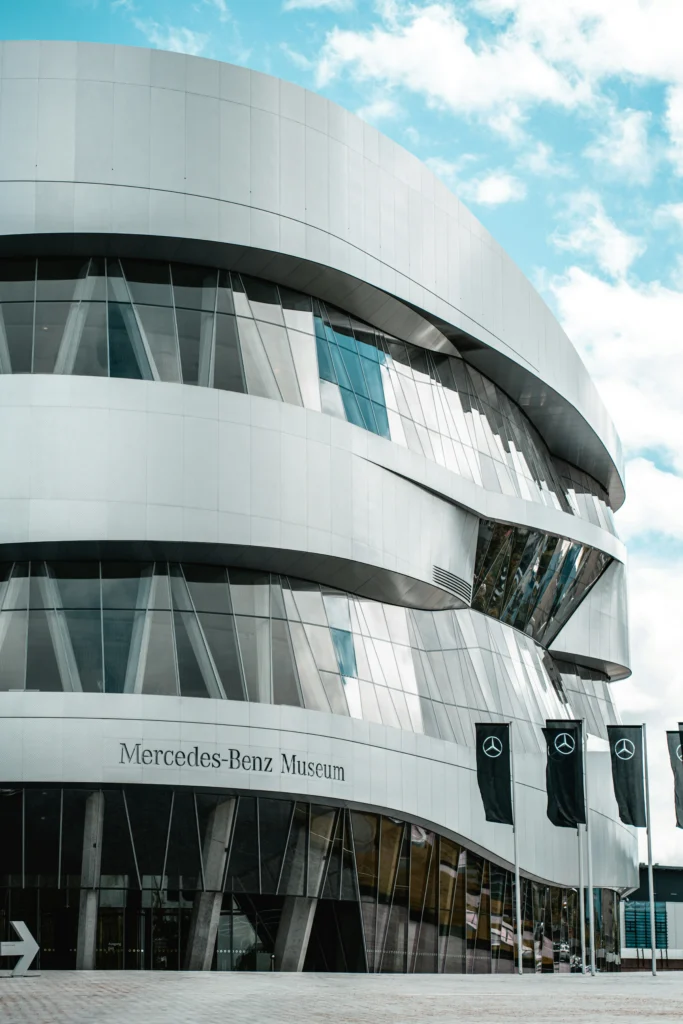
Let’s start with the big one. Even if you’re not a car person, the Mercedes-Benz Museum is impressive. The building itself is a piece of modern architecture, and inside you’ll find over 160 vehicles spanning more than 130 years of automotive history.
The museum starts at the top floor and spirals down through different eras. You’ll see everything from the first motorized vehicle ever built (1886) to futuristic concept cars. There’s also a lot of historical context—how cars evolved during wartime, the rise of motorsports, and the development of safety features.
It takes about 2-3 hours to see everything. Audio guides are included with admission, and they’re actually worth using. The museum is located in Bad Cannstatt, easily reachable by S-Bahn.
Tip: Go early or late in the day to avoid tour groups.
Porsche Museum
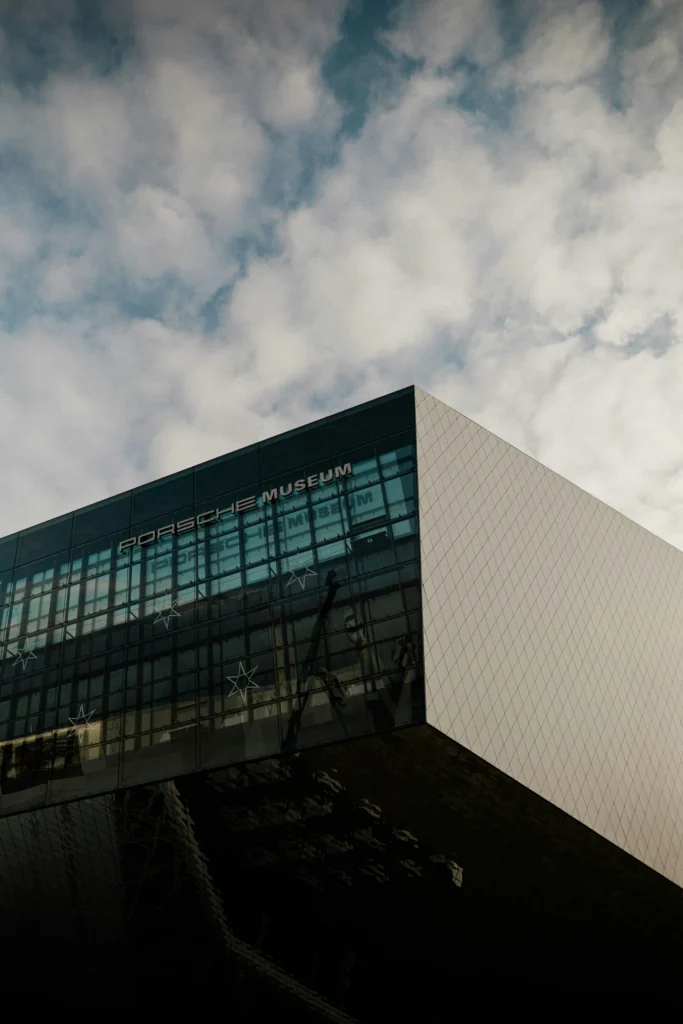
If Mercedes-Benz is Stuttgart’s history lesson, the Porsche Museum is its sports car shrine. This place is smaller and more focused, with about 80 vehicles on display. You’ll see iconic models like the 911, racing cars, and prototypes that never made it to production.
The museum is in Zuffenhausen, north of the city center. It’s modern, sleek, and very Instagram-friendly. Car enthusiasts could spend hours here, but even casual visitors will appreciate the design and engineering on display.
Both car museums are worth visiting if you have time, but if you only pick one, go with Mercedes-Benz for the broader historical perspective.
Schlossplatz
This is Stuttgart’s main square and the heart of the city. It’s surrounded by the New Palace (Neues Schloss), the Old Palace (Altes Schloss), the Königsbau shopping arcade, and the Kunstmuseum Stuttgart.
In summer, locals hang out on the grass, kids play in the fountains, and there are often events or markets happening. It’s a good spot to people-watch and get a feel for the city. The square is also beautifully lit up at night.
Stuttgart Stadtbibliothek
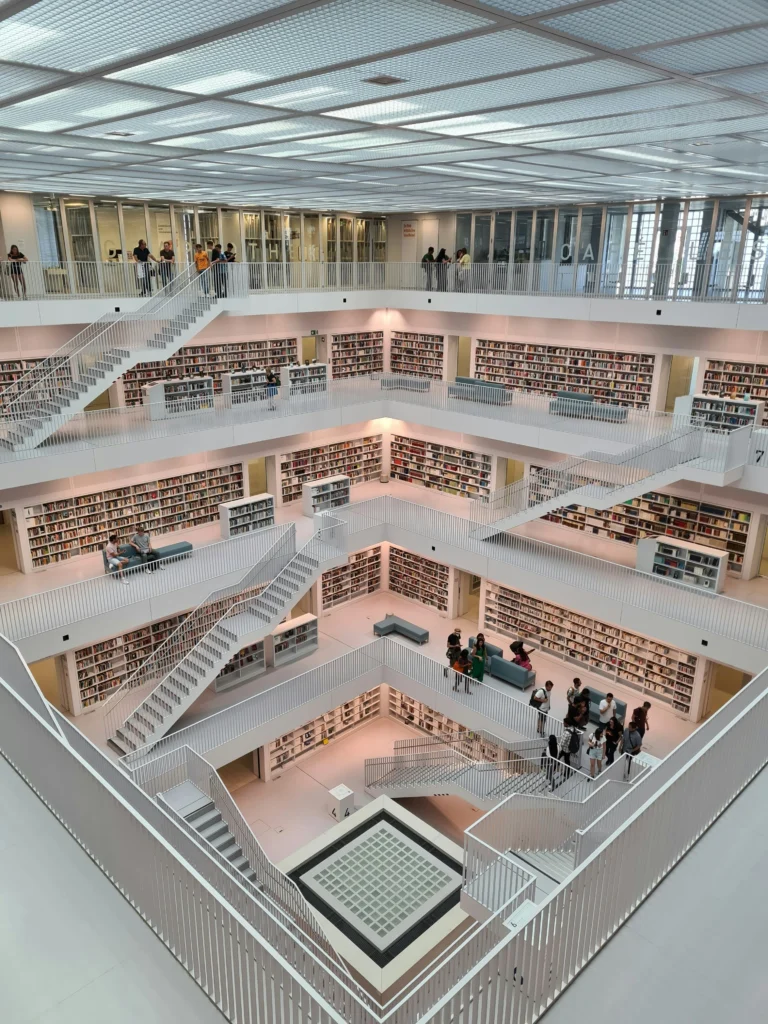
The Stuttgart City Library is one of those buildings that looks like it belongs in a sci-fi movie. Designed by South Korean architect Eun Young Yi and opened in 2011, it’s a minimalist cube on the outside and a stunning all-white, five-story atrium on the inside.
You don’t need to be a library member to visit—just walk in and head to the top floor for the best views. It’s become a popular Instagram spot, but it’s also a functioning library, so keep noise to a minimum.
The library is located near the main train station, making it an easy stop if you’re arriving or leaving the city.
Kunstmuseum Stuttgart
This glass cube building on Schlossplatz houses Stuttgart’s municipal art collection. The focus is on modern and contemporary art, with works from the 19th century to today. There are rotating exhibitions alongside the permanent collection.
The building itself is worth seeing—it glows at night and offers views over the square from the upper floors. If you’re into art, plan for at least an hour here.
Stuttgart State Gallery
For a more traditional art experience, head to the Staatsgalerie. This museum has an impressive collection of European art from the Middle Ages to the present, including works by Rembrandt, Monet, Picasso, and German Expressionists.
The building combines classical and postmodern architecture (the newer wing was designed by James Stirling in the 1980s). It’s one of Germany’s most visited art museums, and for good reason.
Admission is free on Wednesdays, which is a nice bonus.
Ludwigsburg Palace
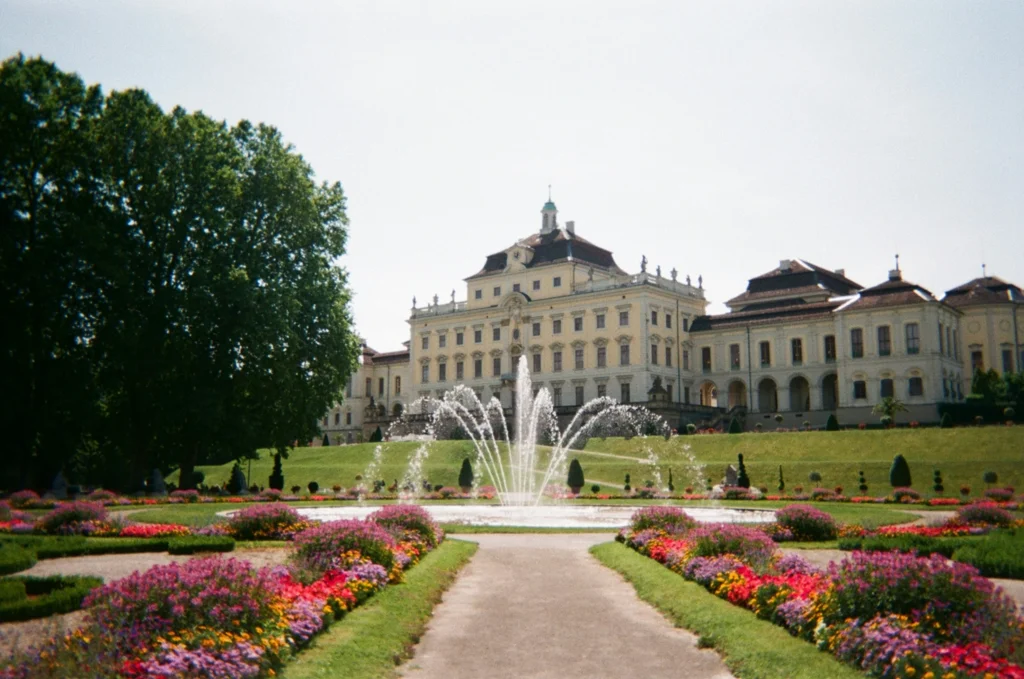
About 20 minutes north of Stuttgart by S-Bahn, Ludwigsburg Palace is one of Germany’s largest Baroque palaces. It’s often called the “Versailles of Swabia,” and while that’s a bit of a stretch, it’s still pretty spectacular.
You can tour the palace interior (guided tours available in English), explore the formal gardens, and visit the palace museum. In spring and summer, the gardens are in full bloom and perfect for a stroll.
There’s also a fairy-tale garden on the grounds that’s great if you’re traveling with kids.
Wilhelma Zoo and Botanical Garden
Wilhelma is one of the most popular attractions in Baden-Württemberg, and it’s easy to see why. It’s both a zoo and a botanical garden, set in a 19th-century Moorish-style palace complex.
You’ll find over 10,000 animals from around the world, plus greenhouses filled with tropical plants, orchids, and cacti. The grounds are beautifully landscaped, and there’s enough to keep you busy for half a day.
It’s especially nice in spring when the magnolias and cherry blossoms are blooming.
Markthalle Stuttgart
If you’re a foodie, don’t skip the Markthalle. This historic market hall dates back to 1914 and is filled with vendors selling fresh produce, meats, cheeses, baked goods, and international cuisine.
It’s a great spot for lunch or to pick up snacks. There are also a few small restaurants and cafes inside. The atmosphere is lively, and it feels more local than touristy.
Stuttgart vineyards and wine hiking
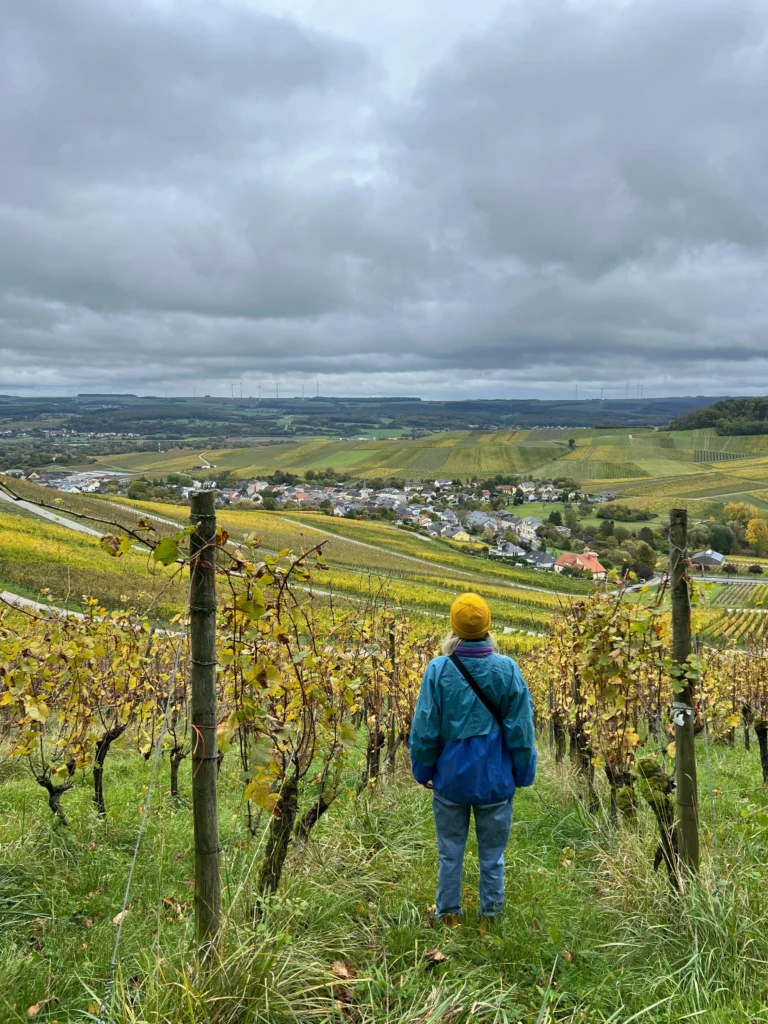
Here’s something you won’t find in most German cities: vineyards within the city limits. Stuttgart has over 400 hectares of vineyards, and you can hike through them on marked trails.
The Weinwanderweg (wine hiking trail) takes you through the hills surrounding the city, with views over Stuttgart and the valley. Along the way, you’ll pass wine taverns (Besenwirtschaften) where you can stop for a glass of local wine and traditional Swabian food.
The trail to the Sepulchral Chapel on Württemberg Hill is particularly scenic. The chapel was built by King Wilhelm I for his late wife, and the views from the top are worth the climb.
Beer gardens in Stuttgart
Stuttgart has a solid beer garden scene, especially in summer. A few favorites:
- Biergarten im Schlossgarten – Right in the city center with views of the palace
- Karlshöhe – On a hill overlooking the city, great for sunset
- Schwabengarten – More local, less touristy, good food
Beer gardens here are more relaxed than in Bavaria. You can bring your own food (though most people don’t), and the vibe is casual.
TV Tower (Fernsehturm Stuttgart)
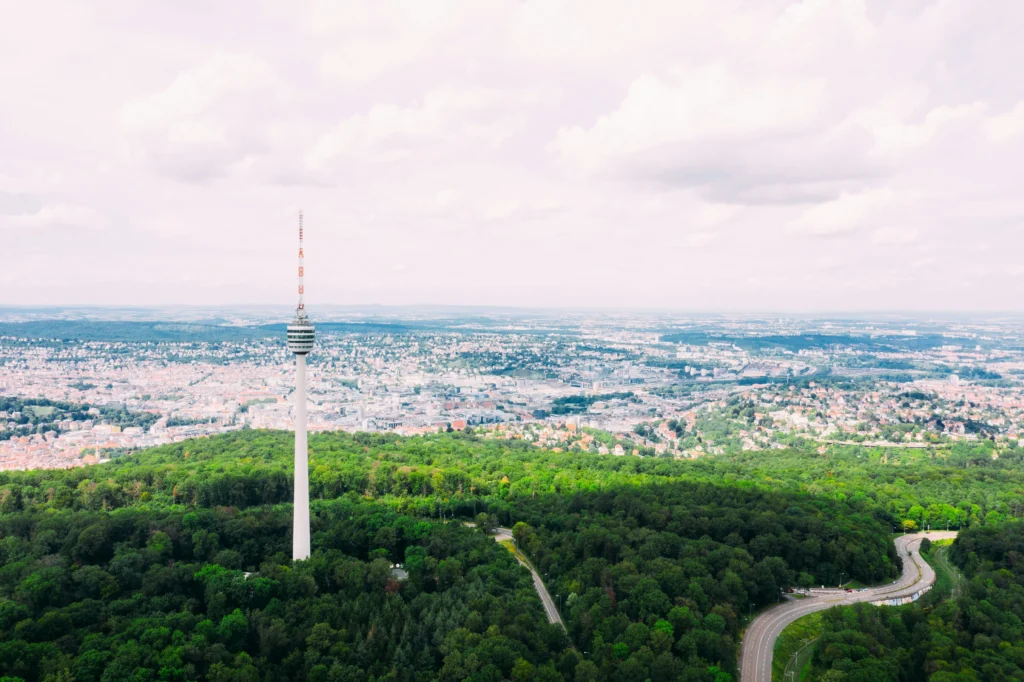
Stuttgart’s TV Tower was the first of its kind in the world when it was built in 1956. It’s 217 meters tall and offers panoramic views over the city and surrounding countryside.
There’s an observation deck and a rotating restaurant at the top. On clear days, you can see all the way to the Black Forest and the Swabian Alps.
The tower is located in the southern part of the city, reachable by U-Bahn or a short hike through the forest.
Killesberg Park
This large park in the north of Stuttgart is a local favorite. It has walking paths, gardens, a small lake, and a miniature railway that kids love. There’s also the Killesberg Tower, a 40-meter observation tower with views over the park and city.
It’s a nice spot for a picnic or a break from sightseeing. In summer, there are often concerts and events here.
Festivals in Stuttgart
Stuttgart knows how to throw a party. The two biggest festivals are:
- Frühlingsfest (Spring Festival) – Held in April/May, this is Germany’s second-largest beer festival after Oktoberfest. Think beer tents, traditional costumes, carnival rides, and lots of pretzels.
- Cannstatter Volksfest – Held in September/October, this is Stuttgart’s version of Oktoberfest and actually attracts more visitors. It’s been running since 1818.
There’s also a Christmas market in December that takes up most of Schlossplatz. It’s one of the largest in Germany and has a great atmosphere.
Pig Museum
Okay, this one’s a bit weird, but hear me out. The Schweine Museum (Pig Museum) has over 50,000 pig-related items on display. It’s quirky, fun, and surprisingly entertaining.
You’ll find everything from piggy banks to pig art to pig-themed toys. It’s not for everyone, but if you’re looking for something offbeat, this is it.
Das Leuze Mineral Spa
After all that walking and stair-climbing, you might want to relax. Das Leuze is a large public spa with indoor and outdoor pools, saunas, steam rooms, and jacuzzis. The water is mineral-rich and comes from natural springs.
It’s a popular spot with locals, especially on weekends. The StuttCard gets you a discount on admission.
Day trips from Stuttgart
If you have extra time, there are some great day trips within easy reach:
- Esslingen – A charming medieval town 15 minutes away by S-Bahn, known for its half-timbered houses and Christmas market
- Tübingen – A picturesque university town about 45 minutes south, with a beautiful old town and river views
- Black Forest – About an hour’s drive west, perfect for hiking and scenic drives
- Hohenzollern Castle – A fairy-tale castle perched on a hilltop, about an hour south
Where to stay in Stuttgart
Stuttgart has accommodation options for every budget:
- Budget: Hostels like Alex 30 or A&O Stuttgart City are clean and centrally located
- Mid-range: Hotel Unger or Jaz in the City offer good value and modern rooms
- Boutique: Der Zauberlehrling is a quirky, design-focused hotel with a Michelin-starred restaurant
- Luxury: Steigenberger Graf Zeppelin is Stuttgart’s classic five-star hotel near the main station
Staying near the Hauptbahnhof (main train station) or in the city center gives you easy access to public transport and most attractions.
Best time to visit Stuttgart
Spring (April-June) and fall (September-October) are ideal. The weather is mild, the parks are beautiful, and you can catch one of the big festivals.
Summer (July-August) is warm and great for outdoor activities, but it can get crowded. Winter is cold but festive, especially if you’re there for the Christmas market.
Practical tips for visiting Stuttgart
- Language: German is the main language, but most people in the tourism industry speak English
- Currency: Euro (€)
- Tipping: Round up or add 5-10% at restaurants
- Safety: Stuttgart is very safe. Just use common sense with your belongings
- Sunday closures: Most shops are closed on Sundays, but restaurants and attractions stay open
Final thoughts
Stuttgart surprised me. It’s not flashy or overly touristy, but it has substance. The museums are world-class, the food and wine scene is underrated, and the green spaces make it feel less like a big city and more like a place people actually want to live.
If you’re planning a trip to southern Germany, don’t skip Stuttgart. Give it a couple of days, explore beyond the car museums, and you’ll see why locals are so proud of their city.